
I've trained with martial arts legends, eaten dinner with THE ninja master, and jumped out of airplanes. I also have almost no photos to prove any of it happened. This is what I learned from a life lived off-camera.
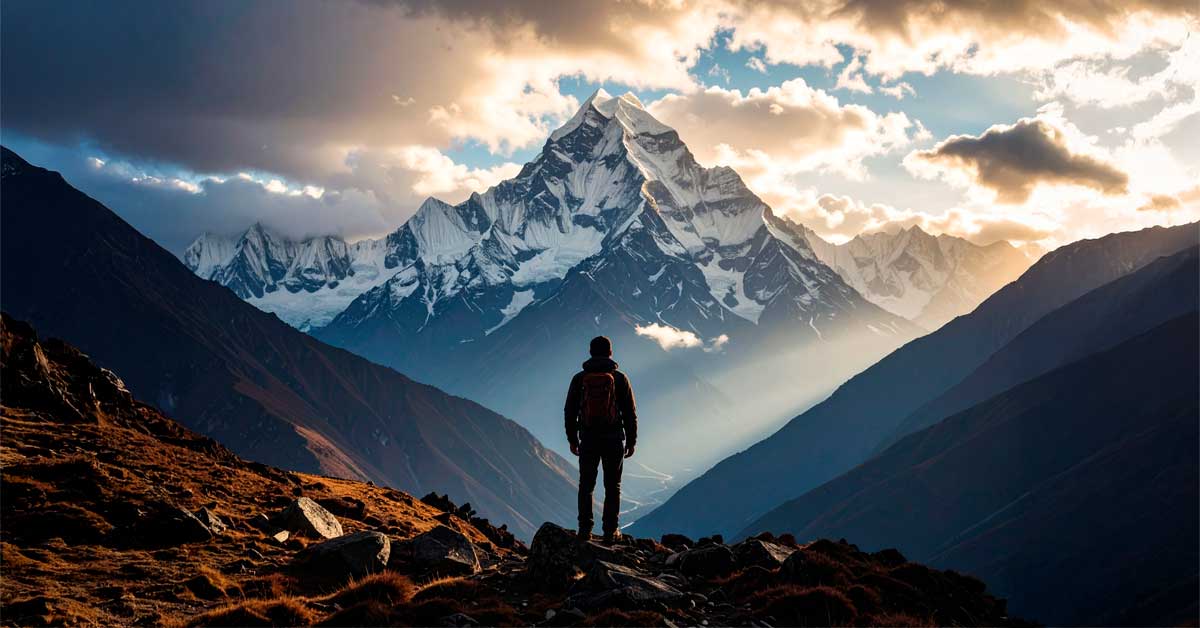
It was late. I had edits to finish from today's shoot... but instead, I clicked on The Secret Life of Walter Mitty for the umpteenth time.
That film always gets me.
The cinematography. The introvert's daydreams. The longing for a life more vivid than the one you're in.
Walter Mitty works in the basement of Life magazine, carefully managing photographic negatives from the world's greatest adventure photographers. He zones out often, mind somewhere else entirely, slipping into elaborate daydreams where he's the hero. Helicopters. Mountains. Adventures that taste like freedom but feel impossible to reach.
I know that stare. I've worn that same expression in dojos, at desks, in airport terminals - dreaming of action while avoiding it.
The daydreamer's paradox: craving adventure while staying frozen. Rehearsing courage while avoiding the stage.
But here's what Walter's story doesn't tell you. Sometimes you stumble into the adventures you've been dreaming about. Sometimes you say "yeah, sure" to the wrong person at the right moment and find yourself eating curry with a legendary ninja master, or being told by one of karate's most feared fighters that you should eat more.
And sometimes you live other people's fantasies so accidentally, so undocumented, that years later you wonder if they were just elaborate daydreams after all.
The Accidental Adventurer
I've lived most of my life by a simple credo: say "yes" to whatever came my way.
That's how I ended up:
- Jumping out of an airplane.
- Working as a bodyguard.
- Training as a sushi chef.
- Becoming a fashion photographer.
It's also how I found myself learning from masters... some kind, some cruel, some unforgettable.
A conversation on a plane. A friend of a friend. Someone saying, "You should come with me," and me - broke but curious - saying yes.
That's how I met a representative from the Kukkiwon, the world headquarters of Olympic Taekwondo. I was just on a random business trip to Seoul. One introduction led to a tour. The tour led to an invitation. I trained there. Just like that.
That's how I visited the Yoshinkan Aikido Hombu (headquarter) dojo in Tokyo, where the Tokyo Riot Police train. Gozo Shioda sensei himself - a direct student of Ueshiba, the founder of Aikido - gestured for the head instructor to throw me around when he heard I'd trained in judo and jujutsu. An unexpected honor. A memory that lives in my spine.
That's how I walked into Ed Parker's Kenpo Karate school in Los Angeles. Just off a bus. Barely arrived in America. Asked to speak with the Grandmaster himself, to tell him I wanted to be his student. The audacity of youth, walking into a legend's house without an appointment.
That's how I ended up at Kyokushinkaikan headquarters, where the legendary Sosai Mas Oyama looked at my frame and said, "You're too skinny. You should eat more." People laughed. I didn't. I was too stunned by the weight of the moment.
Other times, the adventure wasn't so clear-cut.
Like the time I traveled to the island of Shikoku with a Shorinji Kempo practitioner I met in Tokyo, on a pilgrimage to their headquarters. We didn't train much, but appreciated the temple and where history was made. I insisted we swing by the Ashihara Karate hombu dojo - home of another hero I knew from a manga (comic book). Just seeing it in person felt like closing a loop from childhood.
Sometimes it was simpler still:
- Training Muay Thai in Thailand.
- Learning Chinese martial arts in Taiwan.
- Wandering into a Filipino village where the locals trained with sticks, not to perform but to preserve - hands moving with generational rhythm.
And then there was Hatsumi-sensei. The Ninja master himself. After training, someone invited me to join the group for curry. He sat down beside me. Talked like we were old friends. Me, a half-Japanese kid who never felt like he fully belonged, suddenly belonging... if only for a meal.
None of this was planned. I didn't chase legends. I just kept saying yes.
What I didn't realize was how quickly extraordinary becomes invisible without proof.
The Weight of Empty Albums
Here's the thing about living before smartphones: moments just disappeared.
I was often too poor to afford film, let alone developing it.
When I did have a camera, cultural conditioning kicked in.
You don't ask seniors for photos. You don't impose. You speak when spoken to. As a hafu kid who grew up in Japan, that deference ran deeper than most people understand. Gaman - Quiet endurance. Don't be the one to ask.
I was in photos, sure. But not with my camera. With other people's cameras. Photos that lived in other people's albums, other people's memories. Photos I'd never see again.
The irony cuts deep now. I watch modern martial arts enthusiasts document every seminar, every meeting, every minor achievement. They create mini-documentaries of their journeys.
And I think: I trained with and met legends when they were still alive, still teaching, still changing lives one student at a time. And I have almost nothing to prove it happened.
Sometimes I catch myself wondering:
Did I actually experience these things?
The memories are vivid, rose-colored by time, but memories can lie. Without proof, without documentation, do they count?
The Smaller World
The world is different now. Smaller. Finding these places and teachers is easy. Google, social media, martial arts tourism. You can plan a pilgrimage to any dojo, any master, any technique you want to learn.
Back then, finding Hatsumi-sensei meant knowing someone who knew someone. Getting invitations to train at legendary dojos meant stumbling into the right conversation with the right person.
Everything was harder to reach, which made reaching it more significant somehow.
Do I feel envious watching modern practitioners document their journeys with professional cameras and perfect lighting?
Maybe.
The access, the ease, the tools... yes, I'm envious of those things. But there's something else. Something harder to name.
Presence Over Proof
There's a scene in Walter Mitty where Sean Penn's character, a photographer, spots a rare snow leopard - "the ghost cat" - and doesn't take the picture.
He just sits with it.
Watches.
Exists in the moment without needing to prove it happened.
"If I like a moment, I don't like to have the distraction of the camera. I just want to stay in it," he says.
I lived that philosophy without choosing it.
My experiences were unhampered by technology, by the need to be seen, to share every moment. No one had cameras ready. Everyone was just... there.
With intention. With presence.
When Mas Oyama told me to eat more, I wasn't thinking about the Instagram post. When Hatsumi-sensei shared stories over dinner, I wasn't calculating the documentary value. I was just there, absorbing, learning, being changed by moments that would never make it to social media.
Maybe that's what I gained from all those undocumented years. The ability to be fully present in legendary moments. To let extraordinary experiences change me without needing to change my follower count.
Still Here, Still Dreaming
The daydreams haven't stopped. They still pull me toward far-away places I've only read about, locations I want to photograph, experiences I've yet to explore, people I've yet to meet. But I've learned something about the space between vision and reality.
Sometimes you live the fantasy and don't realize it until years later.
The adventure you've been craving might be the one you accidentally stumbled into and forgot to document.
Being there is not just enough... it's everything.
Walter Mitty's journey was about stepping into his daydreams deliberately, driven by a missing photograph, negative 25, that pulled him from his basement office into real adventure.
My journey was the opposite... stumbling into extraordinary moments and learning to trust that they happened whether or not anyone else could verify them.
Those experiences live with me now. In the way I bow, the way I understand respect and discipline, the way I recognize the presence of mastery and the weight of legacy. They shaped how I see the martial world in ways no photograph could capture.
The moments remain. They happened whether or not Instagram knows about it.
And maybe that's the most radical act of all in our documented age: letting experiences transform you in silence, in secret, in the space between what was and what could be.
Like Walter, I'm still dreaming.
But I've learned something he's just discovering...
...sometimes the most extraordinary life is the one you can't prove you lived.
A wonderful life well lived….!!!!
P. S. And so much more🤙😎