
What I Learned Standing Perfectly Still
I paid good money to learn ancient Chinese fighting techniques from a master with impossible green eyes. What I got instead was an unexpected lesson in facing my own mind. Here's how standing perfectly still for weeks taught me more about myself than years of regular martial arts training.
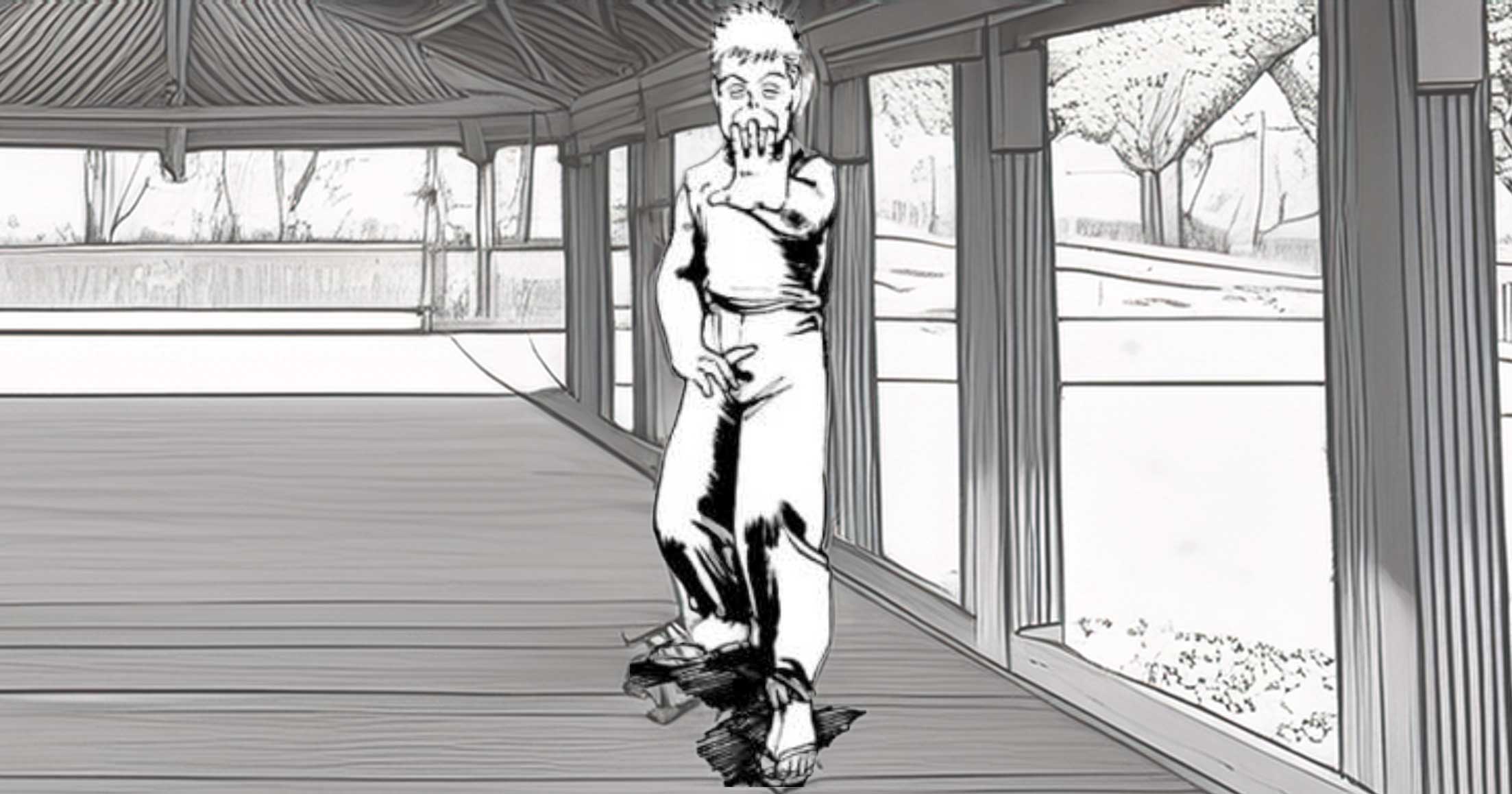
The old Chinese master had piercing green eyes and jet-black hair that shouldn't have belonged to someone pushing eighty - or to someone Chinese, for that matter.
I met him first at his home - a small house in the Chinese section of town, near where we would end up training. The room felt like a sauna with the thermostat broken. An ancient fan pushed hot air around while flies circled overripe watermelon his wife had served. Sweat ran down my back as I tried to stay composed and formal, sitting on a worn couch next to my interpreter - a senior student who'd vetted me for this meeting.
His wife kept offering more watermelon. I didn't want it - between the flies and the heat, my appetite had fled - but my interpreter kept nudging me with side-eye glances that clearly meant: eat it, be respectful.
The master sat angled away from me, smiling but saying little. When he did speak, it was in rapid Mandarin that my interpreter would translate into explanations about lineage, training methods, and something that made me pause: per-technique pricing.
No monthly tuition. No contracts. You paid for each piece of ancient knowledge, one technique at a time.
I wasn't desperate for a teacher. My previous instructor had taught me Tai Ji and was about to start me on Xing Yi when he simply vanished - the way teachers sometimes do when you need them most.
This old master had an impeccable lineage, a direct connection to Xing Yi's founder.
What I thought I was buying: centuries-old Chinese fighting secrets.
What I actually got: the most effective therapy session of my life.
Though it took me weeks of sweating in a park pavilion to figure that out.
The Setup
Training happened in a park in an area so Chinese it could have been transported from another continent. Every Saturday and Sunday at 7 AM, in a covered pavilion with no tables or benches - just open space under a roof.
The first few weeks, I was his only Xing Yi student present. He taught Tai Ji and Ba Gua as well to other students, but his Xing Yi practitioners had stopped showing up, leaving me alone with the master and his unusual teaching method for this particular art.
He pointed to the ground. Demonstrated the stance: one foot forward, one back, hips angled, left arm raised like reaching for something just out of sight, right hand positioned low near the center, guarding something vital.
San Ti. The foundational posture of Xing Yi.
Then he held up his hand, fingers splayed, opening and closing it three times. Fifteen fingers, three times. Fifteen minutes. He pantomimed switching sides.
I was honestly shocked. Fifteen minutes? Standing in one position?
It looked like nothing. Like he'd frozen mid-step on his way to buy groceries.
I remember thinking: This is what I'm paying for? To learn how to stand still?
Little did I know I'd be standing there for weeks.
Turns out, learning to stand still was exactly what I needed. I just didn't know it yet.
The Reality Check
I understood the purpose of the training, at least intellectually. Stand there to develop a strong foundation. I'd been told this is where the practice would stay until I did it right. I'd read books about teachers who supposedly made students stand in stances for years before learning anything else - though I'd always wondered about the validity of those stories.
But I honestly thought I'd learn a lot more, a lot sooner.
Coming from Kenpo and hard-style karate, I was used to learning fighting and self-defense techniques from day one. Even my traditional Japanese jujutsu training - where the basic techniques were done from seiza, the traditional seated kneeling position - had more action than this. I knew Xing Yi was a straightforward, practical art, but I imagined myself actually learning applications, not standing the entire time.
I'd been romanticizing this moment since I was a teenager, when I read the manga Kenji about a boy whose grandfather was a master of Bajiquan. In the story, his grandfather talks about Xing Yi and teaches Kenji's friend Beng Quan - "the crushing fist" - which gets used successfully in a fight. I'd been carrying that image for years: learning these legendary techniques with exotic names.
Instead, I stood still while my mind staged a hostile takeover.
At the time, I was traveling constantly for work - to Asia, all over the US, crossing time zones, airport to airport, city to city. I was frustrated with where my business was going, felt stuck and overworked. I'd try to sneak in training wherever I could - BJJ and JKD lessons here, Kenpo lessons there, and then this.
So going from a life full of stress and constant stimuli - rushing through airports, jumping time zones, managing business crises from hotel rooms - to standing completely still in a park pavilion was painful in a whole different way.
The thing is, for me it wasn't only a physical battle. Sure, getting the posture right, putting weight where it should be, holding my hands where they were supposed to be - that was difficult and tiring. Unbearable even. But the real battle was psychological.
Around us, the park came alive with morning exercisers. Elderly Chinese citizens practicing tai chi, couples dancing the cha-cha, other martial arts groups drilling their forms and techniques. The pavilion filled with the sounds of life in motion while I stood perfectly still, trying to hold a position that looked effortless but felt impossible.
I lasted maybe ninety seconds before my legs started shaking.
At first, I was mortified. Here I was, the lone gweilo - foreigner - struggling to simply stand while everyone else moved with grace and purpose. My heart rate climbed just from the embarrassment of being unable to do something so basic, sweat soaking through my shirt.
It was a familiar feeling. Growing up, I'd been the gaijin in Japan, the outsider in Europe - always the one who didn't quite fit. Now here I was again, conspicuous in my struggle.
But nobody was watching. Nobody cared about the foreigner dripping sweat while trying to master stillness.
The real audience was inside my head, and they had plenty to say.
You look ridiculous.
Everyone can see you shaking.
This is taking forever - are you a slow learner?
You're wasting his time.
You don't belong here.
You're paying good money to torture yourself.
Here's what I learned that first morning: in motion, there's always escape. If your mind starts spiraling, you can run faster, hit harder, move until the thoughts scatter. Motion is medication. Movement is distraction.
But standing still?
Standing still, you're trapped with whatever's been living in your head.
Which, it turns out, was exactly the point. I just hadn't read the fine print.
The Accidental Psychology Session
I'd experienced this years before in my youth during a Zen retreat - sitting on a cushion, told to simply follow my breath, only to discover my mind was running a 24/7 commentary I'd never noticed.
But that had been a glimpse. This was like the difference between a puddle and an ocean.
San Ti wasn't just about mental chatter - it came with the added cruelty of physical pain.
Week after week, my thighs burned excruciatingly. I had to swallow the mental chatter while my muscles screamed for relief. The master would walk over, prod my hip down and back - get seated lower, more pain - make small adjustments, then wait.
The internal circus clearly wasn't the point of the exercise from his perspective. I doubt other students dealt with the same internal circus. These were my demons, presenting themselves while I stood trapped in a pavilion, alone, sweating, shaking.
I'd always wondered what my classmates were thinking during these sessions. Maybe something as innocent as "what's for lunch" or "what should I say when I meet my girlfriend's parents." Maybe just "wow, I'm learning gung fu."
I never saw them really sweat or tremble like me, which made me wonder: Am I weak? I'd watch them glide across the cement pavilion doing the various elements and animal forms - moving gracefully, not straining, like they had serene thoughts floating through their minds.
As opposed to me, standing there like a broken scarecrow with my mind spinning through quarterly sales reports, jet lag, and the growing realization that everyone else seemed perfectly calm while I was having a complete psychological meltdown disguised as martial arts training.
The absurdity wasn't lost on me - everyone else probably contemplating lunch or weekend plans while I was waging psychological warfare in a standing position.
This is stupid.
You're too old for this mystical nonsense.
Real martial artists don't stand around like scarecrows.
You're not disciplined enough.
You never finish anything.
But it wasn't just the old voices. Life was hijacking my brain in real time. Stress from work. Arguments with coworkers. LA traffic that morning. All of it surfaced while I stood there, forced to face every piece of mental debris I'd been running from.
Standing there, I began to notice something beyond the mental chatter: tension I was carrying in my body. This wasn't entirely new - an old back injury had taught me about fear patterns lodged in the body - but San Ti reopened that terrain, forcing me to feel it all with nowhere to run.
Shoulders rigid with stress. Jaw clenched against unspoken words. Hips locked in protective positions I'd developed over decades.
The stance became an unwitting mental forge for discovering what happens when you can't escape through movement.
When you have to face what's actually there.
My battle of stillness. Complete with the growing realization that I'd accidentally enrolled in a training ground for inner demons.
The Breakthrough (Or Breakdown?)
Something strange started happening after a few weeks.
I began to notice the voices without believing them.
Oh, there's that voice again. The one that says I'm embarrassing myself.
And there's the other one, the one that thinks this is all pointless.
And the one that compares me to everyone else.
Standing still, there was nowhere for them to hide. No movement to mask their presence. They had to show themselves if they wanted to speak.
And once I could see them clearly, something shifted.
They didn't disappear. They didn't suddenly become positive affirmations. They just... lost some of their power.
Because I started to understand that they weren't me.
They were just voices. Old recordings playing on repeat. Mental muscle memory from a lifetime of being told - or telling myself - that I wasn't quite right.
The real transformation wasn't happening through learning fighting techniques. It was happening through the radical act of not moving while my mind threw its tantrums.
I was getting mental medicine. I just didn't know that's what it was called.
The Graduation
After weeks of standing, something changed in the master's assessment. One Saturday morning, he watched me hold San Ti, prodded my hip down and back - get seated lower, more pain - made a small adjustment to my elbow, and nodded.
Then he demonstrated Pi Quan - the splitting fist. A step forward, body winding like a spring, then chopping down with the front hand.
I felt relief wash through me, like I'd passed some rite of passage. But it came mixed with trepidation: That took forever. Am I a slow learner? Did others progress faster?
The committee was still meeting, still offering commentary. But now I could observe their chatter without being hijacked by it.
I'd learned something, but it wasn't what I'd expected when I handed over that envelope of cash.
The Real Purchase
I wish I could say I conquered those voices through San Ti practice. That would make for a tidier story.
The truth is, I still struggle with negative self-talk constantly. It's been hardwired into my psyche from childhood - that voice that tells me to just give up and quit, that whispers I'm not good enough, that I don't belong.
It happened even today during my daily outdoor calisthenics workout. Pushing through burpees, that familiar voice started its commentary: This is pointless. You're too old for this. Just stop.
And then, in a quiet moment between exercises, this memory flooded back.
What I learned from those standing sessions wasn't fighting techniques - though I did eventually learn some. What I got was something more valuable: how to breathe through the chatter, how to release tension instead of fighting it, how to be intentional and purposeful even when my mind was spinning.
It's okay to have self-talk. The goal isn't to silence it completely. It's learning not to let it overrun you and hijack your mind.
These days, when life demands stillness - stuck in traffic, sitting through a frustrating meeting, dealing with a difficult phone call - I remember what San Ti accidentally taught me.
How to be present when every instinct says to run.
How to breathe and stay grounded when my mind wants to spiral.
How to observe the voices without letting them drive the car.
That negativity, that friction - I've learned it can actually make me grow stronger. One thought at a time. Not by fighting it, but by not letting it overrun me.
The Most Anticlimactic Martial Arts Movie Ever Made
Looking back, the whole thing feels like I was living in the world's most boring martial arts movie. I had the mysterious master with impossible green eyes, the ancient art, the formal acceptance ritual. But instead of learning to catch flies with chopsticks, I spent weeks just... standing there.
Where was my training montage? My breakthrough moment? My wise master dropping cryptic wisdom about grasshoppers?
I got hand gestures for "fifteen minutes" and a psychological breakdown disguised as gung fu practice.
The master probably thought he was just teaching another student proper foundation work. Those kind eyes, that proud father look when I'd finally hold the stance - he had no idea his student was accidentally working through decades of mental baggage while trying to look mystical.
Twenty-five years later, in the middle of a random workout, this memory flooded back and I finally understood what I'd actually bought.
Not the ancient warrior I thought I was paying to become.
A warrior of stillness.